Qurandia
Ongoing Side PublicationsQurandia is a free, open reading and research resource that matches hadith datasets that don't know each other, trusting not a number but the letter-level fingerprint of the text itself; Quran- and hadith-centred. Translation, word-by-word analysis, tafsir, asbab al-nuzul, the hadith corpus and search all sit under one roof; direct number matching is only 0-14% consistent, while text fingerprinting pushes matching up to 91-99%. Turkish hadith translation coverage stands at 83% today.
- Role
- Founder & Developer
- Duration
- September 2026 — Ongoing
Technologies
Skills
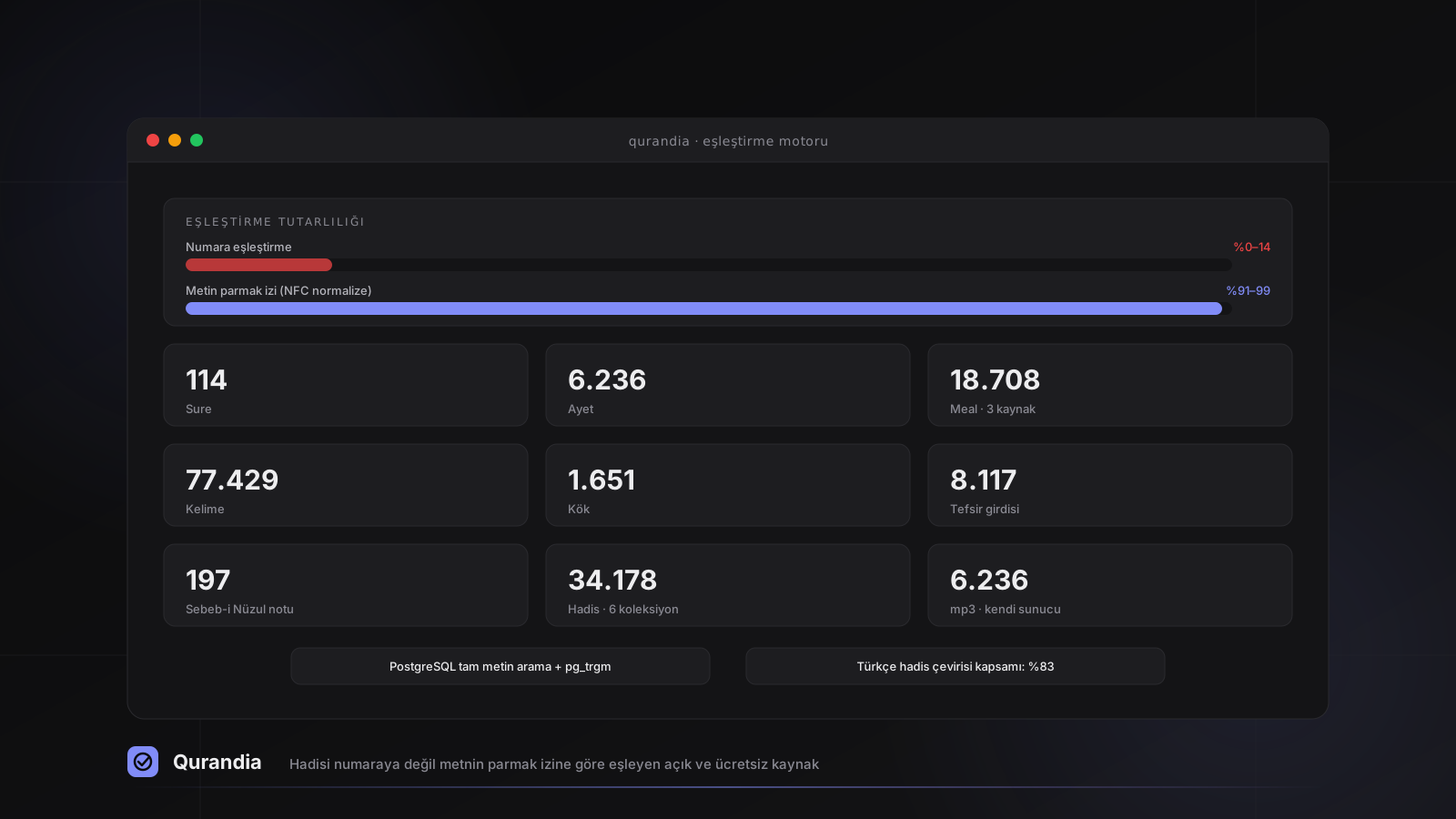
Qurandia is a free, open resource that matches hadith datasets that don’t know each other, trusting not a number but the letter-level fingerprint of the text itself; Quran- and hadith-centred, it keeps translation, word-by-word analysis, comparative tafsir, asbab al-nuzul, the hadith corpus, a root dictionary and search under one roof. The harshest case turned up on the hadith side: the Arabic text and the English translations come from one dataset, the Turkish translations come from an entirely different one, and the two don’t number the same thing the same way — direct matching lands at 0-14% consistency. The fix was to stop using the number at all: normalising the text with NFC, then collapsing spelling variants down to a single letter and trusting the Arabic text’s fingerprint, pushed the match rate up to 91-99% depending on the collection.
In numbers, where things stand today: 114 surahs, 6,236 verses, 18,708 translations from three sources, 77,429 words and 1,651 roots, 8,117 tafsir entries, 197 asbab al-nuzul notes, 34,178 hadiths across six collections; 6,236 mp3 files are hosted on our own servers. I built search on Postgres’s own full-text search and pg_trgm, and never needed a third-party search or UI library. Turkish hadith translation coverage stands at 83% today — the remaining gap sits on the source side and isn’t closed by software; the remainder of the fingerprint match hasn’t matched yet — that’s where automatic matching currently stands.