Skip to content
Muhammet Şafak
tr

Polyglot Developer & System Architect

I design scalable systems.

I have been building software since 2008; in recent years my focus is the architecture of high-traffic systems. Here I share the reasoning behind decisions and the lessons drawn from real projects.

Follow me
Portrait of Muhammet Şafak

In brief

About

I have been building software since 2008. Today I work as a Staff Engineer at a technology company, designing the microservice and event-driven architecture of high-traffic systems. I work across the PHP, Go, Python and JavaScript ecosystems as a developer who focuses on the problem rather than the language. I act as a technical compass for teams on scalability and maintainability decisions, and in my remaining time I maintain my own SaaS products and open-source projects.

At the center of my interests are scalable system architecture, clean API design and testable code. I enjoy sharing what I learn, contributing to open source, and turning ideas into working products.

Go to the about page
Location
Istanbul, Türkiye
Experience
Since 2008 (18+ years)
Now
System Architect
Focus
SaaS & Open Source

Portfolio

Featured Projects

A selection of products and projects I build and maintain.

View all
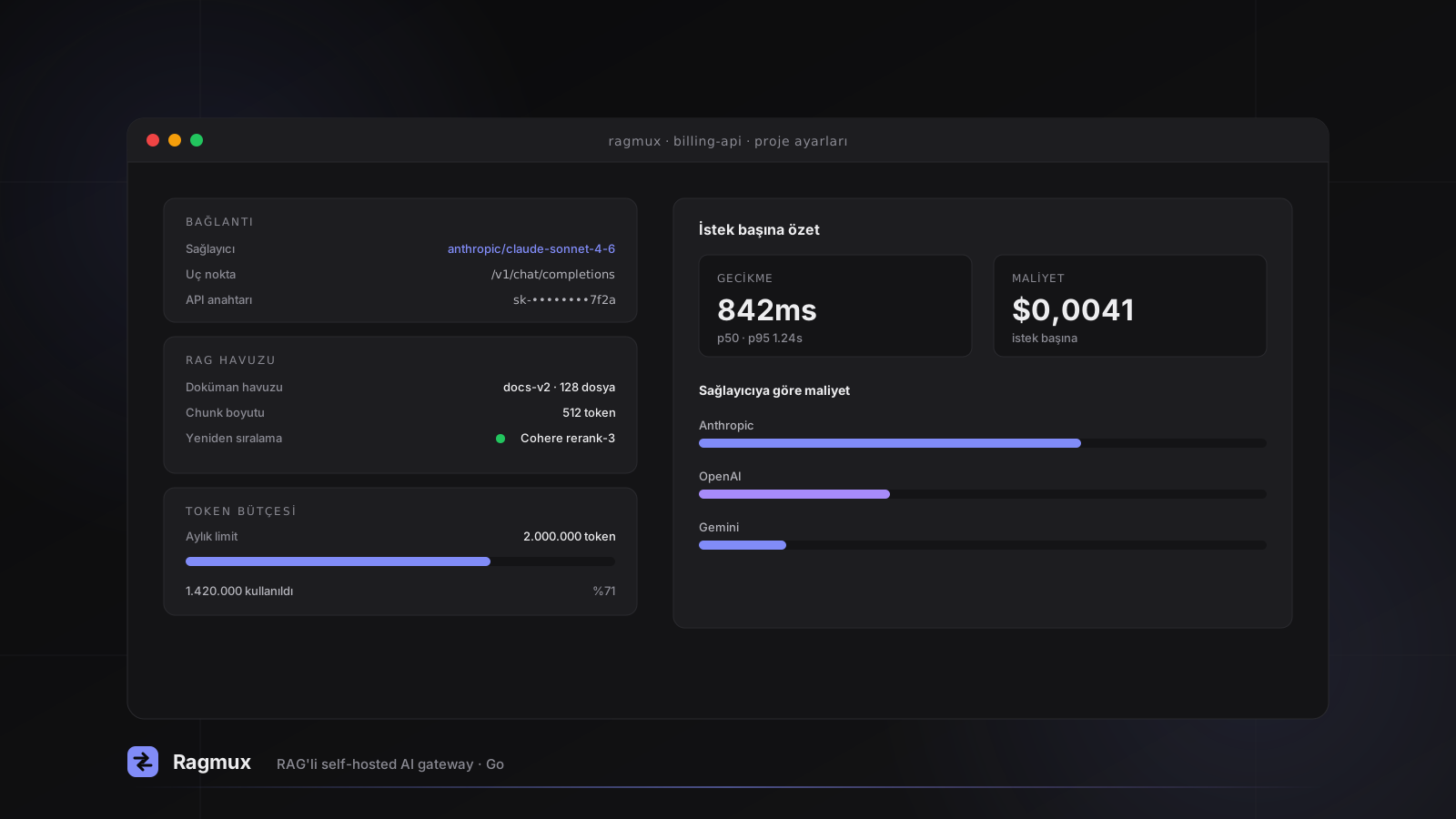
The Ragmux dashboard — a project's connection, RAG store and token budget settings beside a per-request latency and cost summary

Ragmux

Ongoing

Founder & Developer

Tier: Main Focus

Ragmux is a self-hosted, single-binary AI gateway that sits between your application and providers like OpenAI, Anthropic, Gemini, DeepSeek and Ollama. It exposes one OpenAI-compatible API, injects RAG context from the documents you upload into every request of a project that has a store linked, and keeps provider credentials encrypted and away from the application. Users, connections, projects, documents, vectors and metrics all live in one PostgreSQL with pgvector — no Redis, no separate vector database.

Go PostgreSQL pgvector +11 more
September 2026 — Ongoing
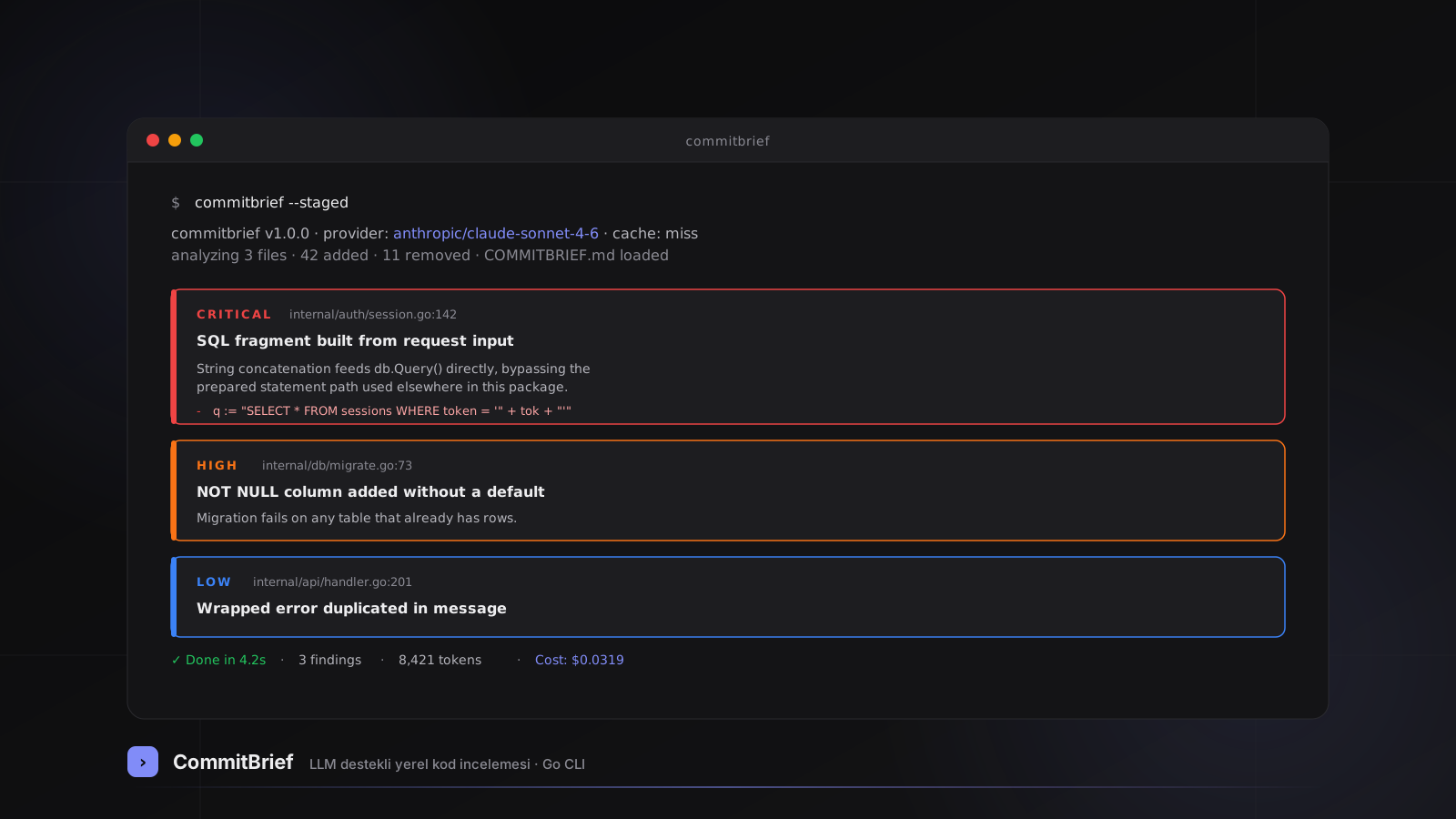
CommitBrief CLI output — code review findings listed as colored severity cards in the terminal

Founder & Developer

Tier: Main Focus

CommitBrief is a provider-agnostic Go CLI tool that performs LLM-powered local code review on git diffs. It reviews any scope — from staged/unstaged changes to a single commit to PR-style three-dot ranges — without leaving the terminal, without leaking the diff, and with customizable project rules.

Go Cobra go-git +8 more
April 2026 — Ongoing
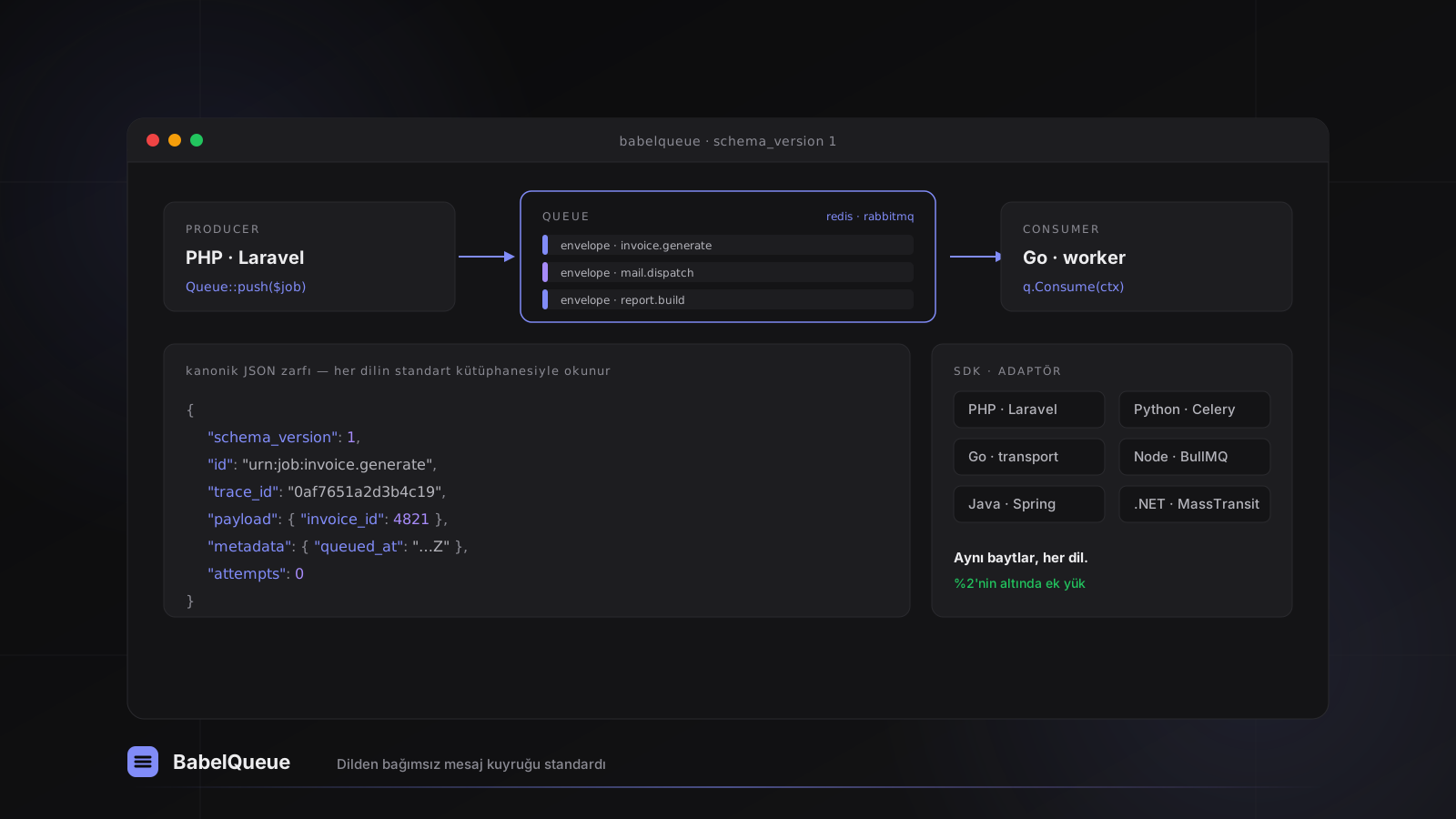
BabelQueue cover — a canonical JSON envelope flowing from a producer through the queue to a consumer in another language, alongside the list of polyglot SDKs

BabelQueue

Ongoing

Founder & Developer

Tier: Main Focus

BabelQueue is a language-agnostic message queue standard that lets services written in different languages share the same queue without getting trapped by serialization lock-in. Instead of language-specific formats like PHP's serialize(), it defines a strict JSON envelope — frozen at schema_version 1 — that every language can read natively. It runs on Redis and RabbitMQ with no sidecar or broker plugin, with an overhead target of under 2%.

JSON Redis RabbitMQ +6 more
June 2026 — Ongoing

Career

Experience

Highlights from my professional software journey.

Full résumé
  1. March 2025 — Ongoing Ongoing

    Staff Engineer

    Bulutklinik Teknoloji Istanbul, Türkiye

    As a Staff Engineer, I design Bulutklinik’s high-traffic healthcare platform using microservice and event-driven architecture, serving as the technical compass for critical design decisions. Grounded in domain-driven design, test-driven development, and performance optimization principles, I continuously improve teams’ code quality and delivery speed while aligning product strategy with technology vision. This approach sustainably enhances the platform’s reliability and flexibility.

    • Software Architecture
    • Distributed Systems
    • Event-Driven Architecture
    • Domain-Driven Design
    • Engineering Leadership
    • Technical Mentorship
    • System Reliability
    • Platform Scalability
  2. September 2022 — March 2025

    Senior Software Developer

    Bulutklinik Teknoloji Istanbul, Türkiye

    As a Senior Developer, I took end-to-end technical ownership of the microservice architecture, automatic scalability, and integration layers of a cloud-based HIS (Hospital Information System) & Telemedicine platform. By re-architecting internal services with secure OAuth 2 flows, I reduced prescription and data synchronization errors by 95% and raised system availability to 99.95%. I also mentored a team of 4–6 people in TDD/DDD and authored a comprehensive code-review guide, shortening the PR feedback loop and significantly expanding test coverage.

    • Software Architecture
    • API Architecture
    • Distributed Systems
    • System Scalability
    • Identity & Access Management
    • Integration Engineering
    • Domain-Driven Design
    • Team Mentorship
  3. June 2012 — November 2021

    Back-end Developer

    Biliver Istanbul, Türkiye

    As a Back-end Developer, I managed the real-time query performance and large-scale data processing layers within the core R&D team of a vertical search engine spanning 40M+ documents. While designing the PHP/Python-based pipeline that crawled 1M URLs per hour and seamlessly indexed 5 GB of data daily, the hybrid MySQL-Redis caching layer I built reduced query latency from 1,500 ms to roughly 140 ms. By partitioning the database and cache clusters, I cut the total DB load by 80% and ensured the system’s high availability.

    • Search Infrastructure
    • Distributed Systems
    • Performance Engineering
    • Data Pipelines
    • Caching Strategies
    • High Availability
    • Large-Scale Data Processing
    • System Optimization
  4. All my experience since 2008

Layered structure

Every project under its own roof

Every kind of product and project sits under an umbrella brand that speaks to the same audience.

Centvix

Centvix is the R&D centre behind every product and project I build.

centvix.com The shared R&D centre behind the brands and the independent work: every product starts here and ships under its own roof.
  • Tignex

    Developer Tools

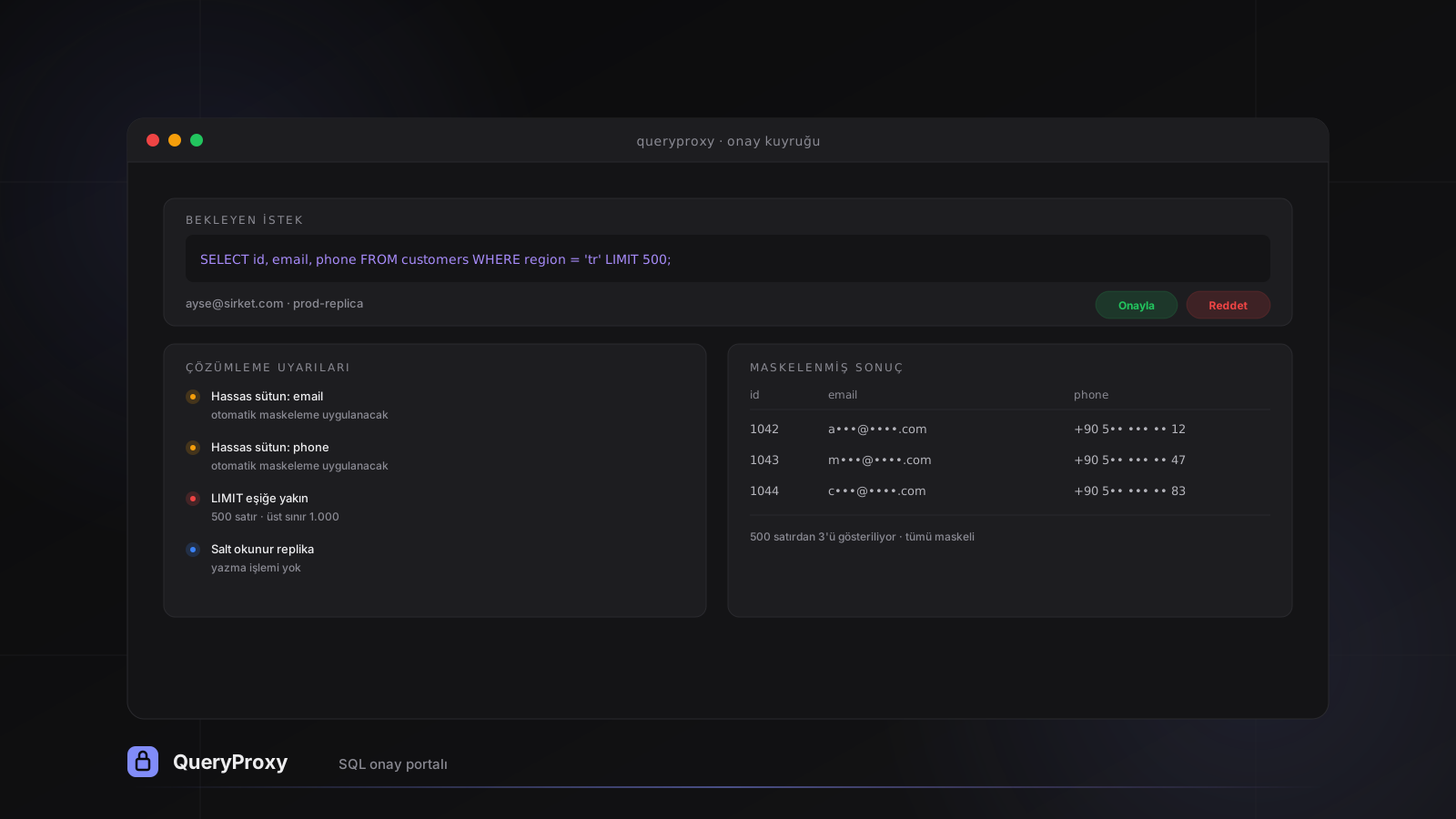
    CommitBrief A provider-agnostic Go CLI that reviews git diffs without leaving the terminal or leaking the diff: providers include Anthropic, OpenAI, Gemini and Ollama. BabelQueue A frozen JSON envelope that lets PHP, Python, Go and Node.js share one queue without serialization lock-in. Runs on Redis and RabbitMQ. QueryProxy A self-hosted portal that puts ad-hoc production SQL behind approval, masking at write time and an immutable audit trail.
    tignex.com Builds open source tools, infrastructure and standards for developers who care about control, interoperability and solid engineering.
  • Parva Machina

    Games and Game Technologies

    Regnarium A dice-free strategy game that resolves a 480-hex map in at most 60 turns, played offline in the browser with no account. SilkWard An offline puzzle game that moves across a node-and-edge board with no dice and no reflexes, running on web and mobile at once from a single TypeScript core. SysAdmin Crisis An offline night-shift simulation where 29 gamified Unix commands are actually parsed, running on web and mobile from a single game engine.
    parvamachina.com Makes strategy, puzzle and simulation games. They run in the browser, go offline after the first load and take no data off the device.
  • Tunedness

    AI Tools

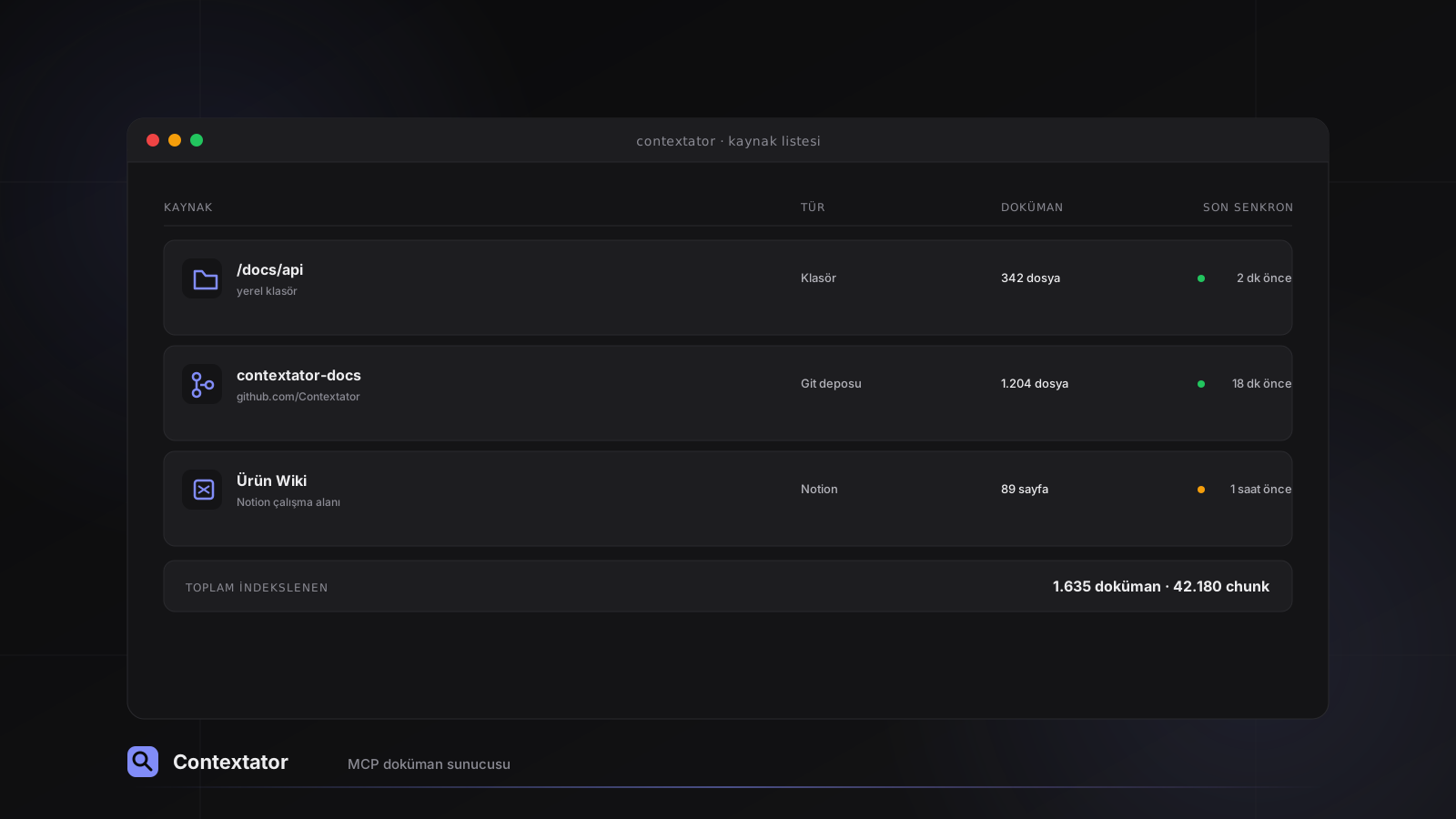
    Ragmux An open-source Go gateway between your application and LLM providers that exposes one OpenAI-compatible API and adds context from your own documents. Contextator An open-source, multi-tenant documentation server that keeps your projects' documents on your own machine and gives each one its own MCP endpoint. AgentFuse A transparent MCP proxy between an agent and its tool servers — a circuit breaker for tool calls. It catches the loops where a model rewords the same request, enforces per-session budgets and can put a suspicious call behind approval. McpGuard A security proxy between an AI client and its MCP servers. It scans for prompt injection, masks personal data, pins server manifests and writes every decision to a hash-chained audit log.
    tunedness.com An applied AI research and engineering lab that turns models into systems which hold up in production.
  • Independent

    Projects and products moving independently

    11 projects

    Portfolio The record of work that shipped: what it does, who for, what it runs on and whether it is still up.

Labs

Where Development Begins

Focus areas, work in progress and the ones that became products — each with its state and maturity, on one page.

Go to Labs
17
records
11
became products

Research

I Do Not Argue What I Have Not Checked

A claim that rests on neither a source nor a number is a preference. The record of what I looked into lives here — measurements, analyses, surveys and reviews — each stating its question, its method and how far I trust the result.

Go to the research
11
records
5
programmes
10
with raw data

Blog

Latest Posts

My latest writing on software, architecture and product development.

View all

Expertise

Which ecosystems have I worked in?

Every programming language opens onto a different ecosystem, and each one carries its own strengths and trade-offs depending on what you need.

Frequently asked

What I get asked most: how I started, what I build with, and how I choose.

9 questions

  • How did you get into software development?

    I met my first computer in 2000, an IBM my family bought. It did not take long to realise that what I really enjoyed was not using the machine but creating something with it; that feeling of making things was incredibly satisfying. My software development journey started there.

  • Which programming languages and frameworks do you use?

    I am fluent in PHP, Python, Go and JavaScript, and I use all four actively. The popular frameworks in those ecosystems are all part of my toolbox: Laravel and Symfony, Django and FastAPI, Gin and Fiber, and the Node.js side. My focus is never the language or the framework, it is the problem to be solved.

  • How do you decide which language or framework to use?

    There is no single answer, but a few parameters drive the decision: the time available for the MVP, the knowledge and experience of the rest of the team, and the specific needs of the product. If nobody on the team knows Go, that product should not be written in Go. By the same logic, I would not write PHP Laravel for a consumer/worker whose only job is to fire a single cURL or SOAP request.

  • What is this site, and why does it exist?

    This is a personal corner of the internet where I share what I know and what I have lived through, in detail. It exists so that I can pass on my experience freely, with no advertising and no revenue motive behind it.

  • Do you use AI?

    I have been using AI actively, as a driving force, since 2023. For the time-consuming grunt work such as reviewing codebases and writing code, agentic AI tools do a good job as accelerators.

  • How long have you been developing software?

    I have been making my living as a software developer since 2008, so 18 years of professional experience.

  • What kind of software do you build?

    My specialisms are web software and CLI tools. I enjoy designing and writing the backend of a system more than anything else.

  • Are you a developer, an engineer or an architect?

    I started out as a developer. Over the years I have done hands-on development in almost every domain, and the engineering solutions I produced made those systems better, stronger and more resilient. Today I define and implement the architecture of high-traffic systems in line with their goals. The three are not alternatives; they are layers stacked on top of each other.

  • Which domains have you worked in?

    I have worked in HealthTech, FinTech and EdTech as lead/main developer, active in both the decision-making and the implementation.

Search the site

Start typing to search posts, projects and pages.

Esc to close Powered by Pagefind