Interactive Laravel Apps Without Writing JavaScript: Livewire
A look at Livewire's server-driven model for Laravel: how it works, when it is the right choice, where its limits lie and how it compares to SPAs.

Written 6 years ago — it reflects the conditions of that time.
1 note was added later: October 5, 2026
My first reaction to Livewire was skeptical. “Dynamic UI without writing JavaScript?” sounded like a marketing tagline — more magic behind the scenes, yet another abstraction layer. A few weeks later, when I tried it on a real project, my opinion changed — though not unconditionally.
Livewire (livewire.laravel.com) is a PHP library that brings Blade templates to life. On every interaction, the browser fires an AJAX request to the server, the component is re-rendered, and the DOM diff is applied. The user never sees JavaScript; and most of the time, you don’t have to write any either.
How does it work?
A Livewire component has two parts: a PHP class and a Blade view. The class holds the component’s state and actions.
<?php

namespace App\Http\Livewire;

use Livewire\Component;
use App\Models\Post;

class PostSearch extends Component
{
    public string $query = '';

    public function render()
    {
        $posts = Post::where('title', 'like', "%{$this->query}%")
                     ->latest()
                     ->take(10)
                     ->get();

        return view('livewire.post-search', compact('posts'));
    }
}
In the Blade view, the wire:model directive binds the $query property to the input:
<div>
    <input type="text" wire:model="query" placeholder="Search by title…">

    <ul>
        @foreach ($posts as $post)
            <li>{{ $post->title }}</li>
        @endforeach
    </ul>
</div>
As the user types, requests go to the server and the list updates. Zero JavaScript.
When is it the right choice?
Let me be concrete about where Livewire delivers real value:
The team knows Laravel but has no frontend expertise. Writing a separate Vue or React application requires knowledge in that domain. Livewire closes that gap.
Admin panel-style interfaces. Filtering, pagination, multi-step forms — all of these can be built with less code using Livewire. Real-time speed expectations are low, and server round-trips are perfectly acceptable.
An existing Blade-based application. Migrating to a full SPA architecture from scratch is a major undertaking. Livewire lets you add interactivity incrementally to an existing structure.
wire:model.lazy: an easy-to-miss detail
wire:model syncs with the server as you type (text inputs are debounced by about 150 ms by default). For a search box that’s expected behavior, but for a regular form field it means unnecessary server load. The wire:model.lazy directive holds off the request until focus leaves the field:
<input type="text" wire:model.lazy="email" placeholder="Email">I learned this the hard way on my first project: when the page got sluggish I opened Chrome DevTools and saw a separate request going out for every character typed. Adding lazy made the problem disappear immediately. It’s a small detail, but it makes a meaningful difference in production.
Where are the limits?
Like any tool, Livewire comes with trade-offs.
Every user interaction triggers an HTTP request. In high-frequency interactions — instant search, drag-and-drop, complex animations — that latency becomes noticeable. Server load increases proportionally as well.
It’s not designed for complex client-side state management. Data flow between multiple components is handled through Livewire events, and that model starts to get complicated beyond a certain point.
And escaping JavaScript entirely isn’t really possible. Doing small client-side operations with Alpine.js inside Livewire components is often unavoidable.
Comparison with SPAs
The difference between a SPA and Livewire isn’t purely technical — it’s operational. With a SPA you’re designing an API, the frontend is deployed independently, and you’re maintaining two separate codebases. With Livewire everything lives in a single Laravel application; deployment is simpler and there’s far less context-switching.
These two approaches aren’t alternatives to each other — they’re answers to different needs. If user expectations are measured in milliseconds and interactions are very dense, a SPA is the better fit. For enterprise dashboards, content management, and form-heavy interfaces, Livewire eliminates unnecessary complexity.
When I decide whether to bring Livewire into a project, the question I ask isn’t “can I avoid writing JavaScript?” — it’s “which model is more sustainable for this particular need?” For some projects the answer is Livewire, for others it’s Vue. Using both in the same project is also possible — and sometimes unavoidable.
Frequently asked
4 questions
-
How does Livewire work?
A Livewire component has two parts: a PHP class that holds the component's state and actions, and a Blade view. The wire:model directive binds a class property to an input. As the user types, requests go to the server and the list updates, with no JavaScript written.
-
When is Livewire the right choice?
When the team knows Laravel but has no frontend expertise, for admin-panel style interfaces such as filtering, pagination and multi-step forms where server round-trips are acceptable, and for an existing Blade-based application where you want to add interactivity incrementally instead of migrating to a full SPA.
-
Where are Livewire's limits?
Every user interaction triggers an HTTP request, so latency becomes noticeable in high-frequency interactions such as instant search, drag-and-drop and complex animations, and server load grows. It is not designed for complex client-side state management, and escaping JavaScript entirely is not really possible, because small client-side operations with Alpine.js are often unavoidable.
-
How does Livewire compare with a SPA?
The difference is operational rather than purely technical. With a SPA you design an API, deploy the frontend independently and maintain two codebases. With Livewire everything lives in a single Laravel application, so deployment is simpler. If user expectations are measured in milliseconds and interactions are very dense, a SPA is the better fit; for enterprise dashboards, content management and form-heavy interfaces, Livewire removes unnecessary complexity.
Experiments on this topic

In Devrazzi a formula sets the score, the model only explains it
A formula sets Devrazzi's 0–100 score; the model only writes the explanation, behind a verification gate. The decision and how it was built.
What it does today
Collects release and vulnerability announcements across the software ecosystem into a single feed, gives every event an importance score from 0 to 100 and explains its impact in Turkish; it also tracks deprecation/EOL and RFC announcements. Useful to software engineers who want to see what changed in their stack without combing through hundreds of sources by hand every day.
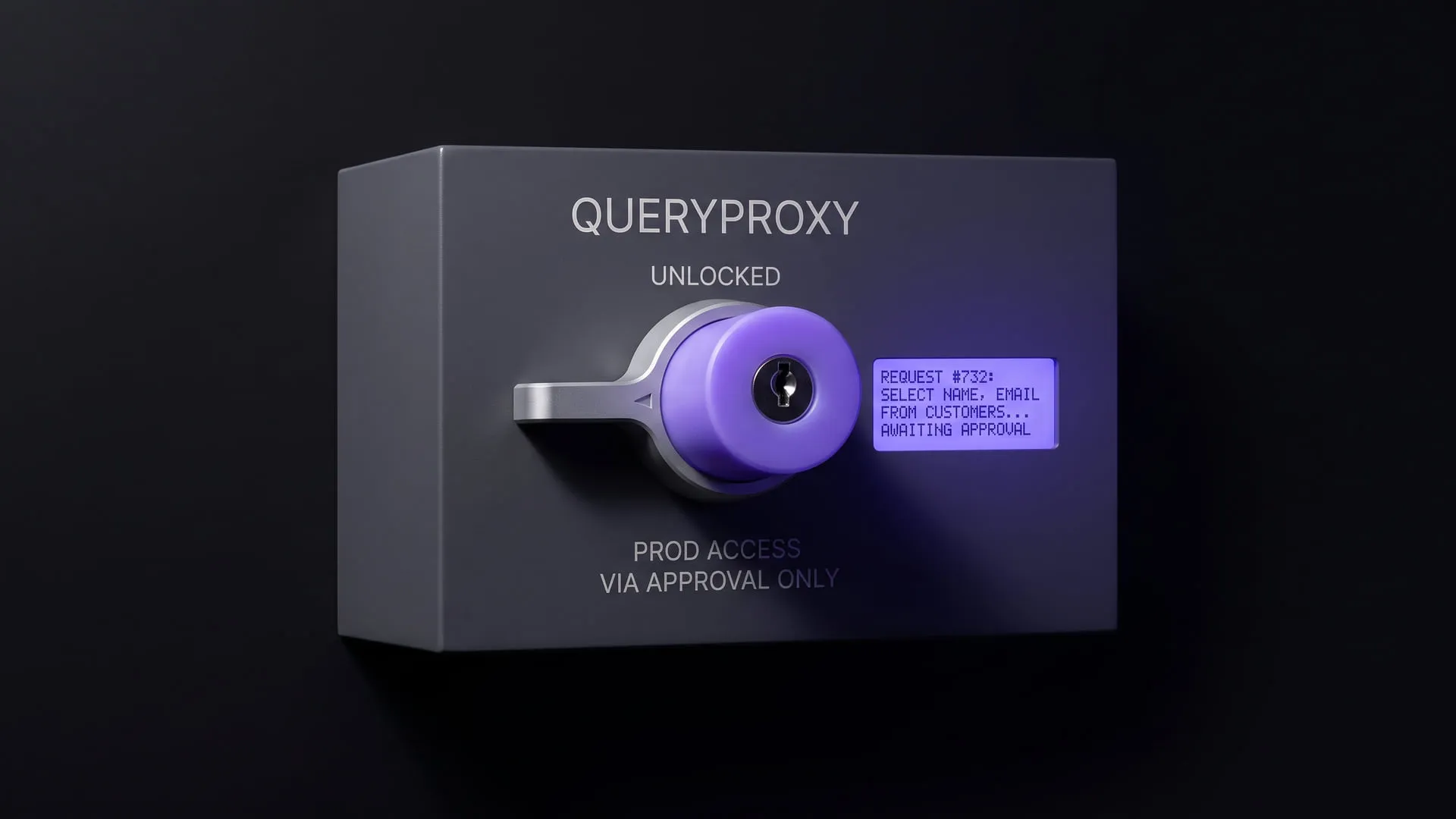
Reaching production data without handing out the password
Build notes on putting ad-hoc production SQL behind approval, masking and an immutable record so nobody has to hand out a password. It became QueryProxy.
What it does today
Runs a developer's SQL against production through an approval step rather than directly; results are masked as they are written to disk and every request lands in an immutable record. Teams where production access sits with one person can run it today.
Comments
Sign in with your GitHub account to join the discussion. Comments are stored in GitHub Discussions.