Regnarium
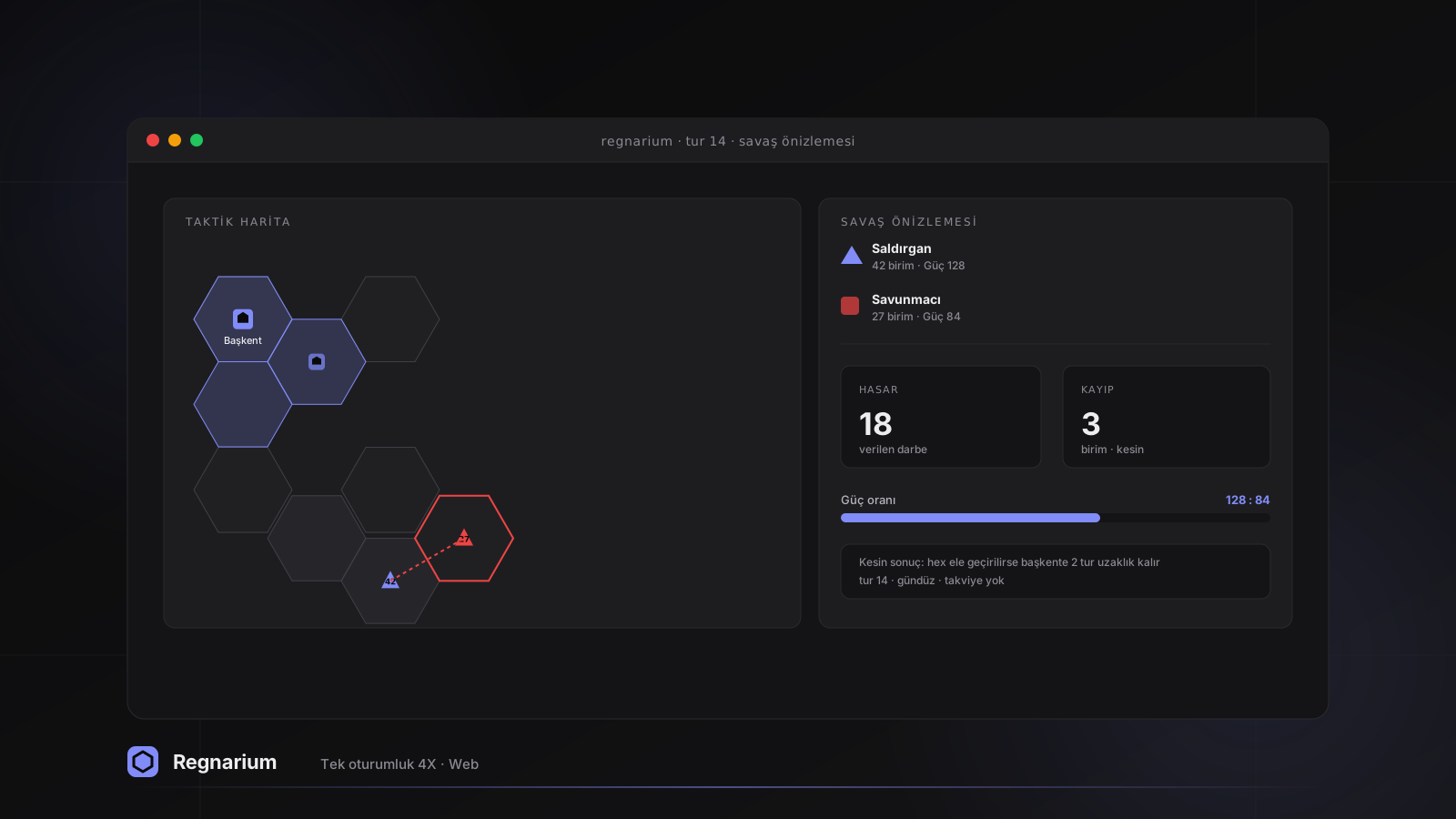
Ongoing Older / Hobby ProjectsRegnarium fits the explore-expand-exploit-exterminate loop of 4X strategy into a single sitting, played offline in the browser. The 480-hex map closes after at most 60 turns, combat rolls no dice and the preview you see before attacking is the calculation itself; there are no accounts, no servers and no tracking.
- Role
- Designer & Developer
- Duration
- September 2026 — Ongoing
Technologies
Skills
Regnarium is a strategy game I designed to fit the four verbs of the 4X genre — explore, expand, exploit, exterminate — into a single half-hour sitting. The player takes on one to three AI opponents across a 20×24 board of 480 hexes; a match closes after at most sixty turns, and if conquest is incomplete the score decides the winner. It runs in the browser, works entirely offline after the first load, and has no accounts, servers, ads or tracking — it plays identically in airplane mode. The design started from a constraint: a usual session in this genre eats an entire evening, and nothing existed for the player who does not have one.
Technically the project is a monorepo where the rules, the map generation and the opponent AI all live in a single pure TypeScript core. That core cannot reach the browser, the clock or the network — those are banned at the lint gate, and whether the gate actually holds is tested separately by linting files written to be wrong on purpose. What this buys is determinism: the same seed and the same sequence of commands always produce the same match, opponent decisions included. That in turn decides the save format; a save is not a full copy of the state but the seed plus the command log, and loading replays it to rebuild the state. Undo uses the same machinery rather than keeping a separate state. Combat is deliberately dice-free, and the preview shown before an attack is the very calculation the engine applies — writing a separate estimate function would have opened the one door through which preview and outcome could drift apart. The board is drawn with ordinary components rather than a canvas, which lets the grid expose a meaningful structure to a screen reader.
The game design is built on cutting scope to fit the constraint: there are five units, five buildings, four terrain types and three resources, and every entry has a job you can tell apart on the board. The opponent AI ships as nine profiles across three personalities and three difficulty tiers, is subject to the same fog the player sees, and does no hidden cheating — the +5 production / +5 food head start the Hard tier receives is stated on the setup screen. The in-game guide was written not as separate prose but as a content layer that reads its numbers straight from the balance data, so a balance change cannot leave a stale rule in the guide. The project is published in Turkish and English, all interface copy lives in a shared translation package, and a test enforces that both languages carry the same key set. An Expo client sharing the same core also lives in the repository; it has not shipped to the stores yet. Development continues.